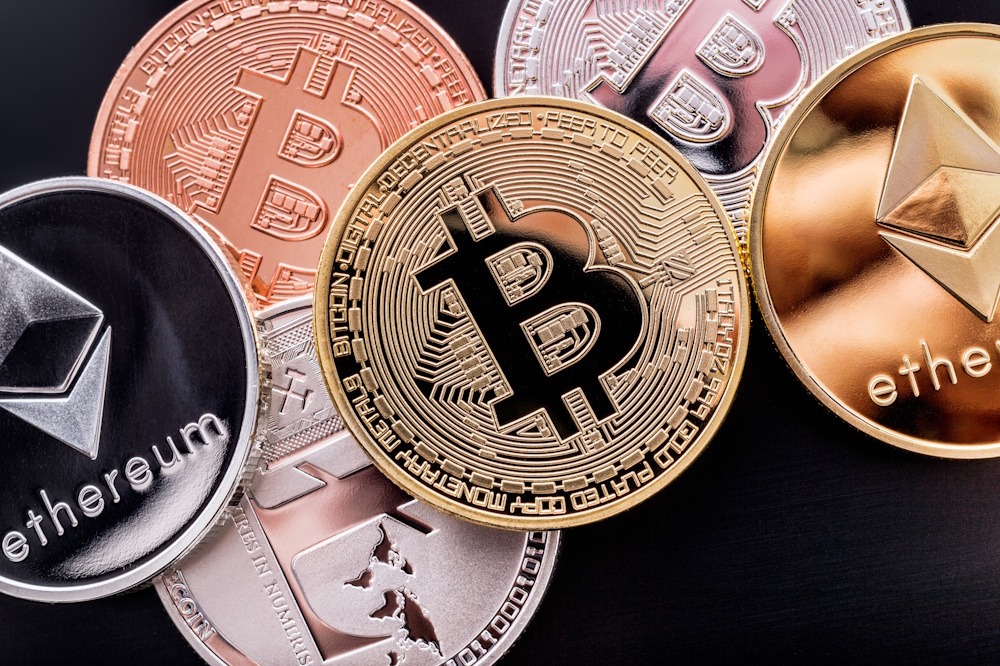
Bitcoin and Ethereum experienced a modest increase as July 31 approached, with a slight change in market dominance indicating that traders were once more monitoring the potential rotation of capital towards significant altcoins. The validated notes indicate that Bitcoin has increased by 0.29%, reaching approximately $64,145.86. Meanwhile, Ethereum fluctuated between $1,890 and $1,920, momentarily falling below $1,900 before making a recovery. Simultaneously, the dominance of BTC and ETH experienced a slight decline, indicating a modest shift towards alternative crypto assets. That is insufficient to declare “altseason,” and it would be imprudent to suggest otherwise. It suffices to assert that the market is increasingly discerning. Bitcoin and Ethereum continue to serve as the foundational assets, as traders evaluate altcoins for their relative strength, emerging narratives, and more definitive catalysts.
The reality is often considerably more complex. Capital rotates in stages, not all at once. Large-cap assets are likely to experience initial movements, followed by higher-quality alternative cryptocurrencies, and subsequently, more speculative investments. At times, the duration of rotation can extend over several days. At times, it diminishes rapidly. At times, one might observe merely a temporary lull in Bitcoin dominance prior to BTC reasserting its supremacy. Bitcoin and Ethereum continue to dominate the landscape. A minor decline in dominance does not indicate that traders have forsaken them. It may indicate that certain capital is seeking more favourable short-term opportunities in other markets. Such a scenario is plausible even as BTC and ETH experience upward movements. Bitcoin continues to be the primary asset that captures the attention of most traders. When BTC exhibits stability or experiences a gradual increase, there is typically an enhancement in risk appetite. Traders might exhibit increased confidence in allocating resources towards Ethereum, Solana, XRP, BNB, Chainlink, Sui, or other prominent altcoins. When Bitcoin experiences a significant decline, that appetite can dissipate rapidly.
Thus, a modest increase in Bitcoin can provide the necessary space for altcoin activity. That does not render Bitcoin irrelevant. It positions Bitcoin as the prevailing weather system under which the remainder of the cryptocurrency market operates. At approximately $64,000, Bitcoin’s standing remains robust enough to sustain market confidence, yet it lacks the explosive potential to capture all attention. Such circumstances may foster selective bids for altcoins. Ethereum’s situation presents a greater degree of complexity. ETH continues to hold its position as the predominant smart-contract asset and a significant point of interest for institutions. However, the current market narrative encompasses Layer 2 solutions, ETF inflows, stablecoin dynamics, DeFi revenue streams, mainnet transaction fees, and competitive pressures from more efficient blockchain alternatives. When Ethereum trades near $1,900, the market does not merely enquire if ETH is appreciating. It enquires into the extent to which Ethereum’s wider ecosystem is drawing in capital. If ETH stabilises, some traders may explore opportunities further down the ecosystem stack: Uniswap, Aave, ENS, Layer 2s, liquid staking, and other DeFi or infrastructure names. That is how the strength of Ethereum can occasionally influence altcoins. However, it is important to note that such spillover effects do not occur automatically.
ETH has the potential to appreciate independently of DeFi tokens. DeFi tokens may experience an upward movement even as ETH remains stagnant. Rotation is seldom as straightforward as traders desire it to be. The most significant distinction from previous cycles is the emphasis on selectivity. In previous bull phases, nearly all assets tended to rally once traders regained their appetite for risk. Currently, the market exhibits increased fragmentation. Liquidity is diminished across a variety of assets. Investors exhibit heightened sensitivity to factors such as token unlocks, revenue generation, governance structures, emissions, legal risks, and the actual utilisation of assets. That implies altcoin rotation may prioritise more robust narratives over individual tokens. Real-world assets, stablecoin infrastructure, DeFi fee switches, AI compute, exchange-linked tokens, and significant ecosystem upgrades are likely to garner more interest than conventional price charts. This is a more beneficial option, even if it may seem less exhilarating. A market where traders enquire about the catalyst is more developed than one where every asset fluctuates solely due to Bitcoin’s stagnation.