
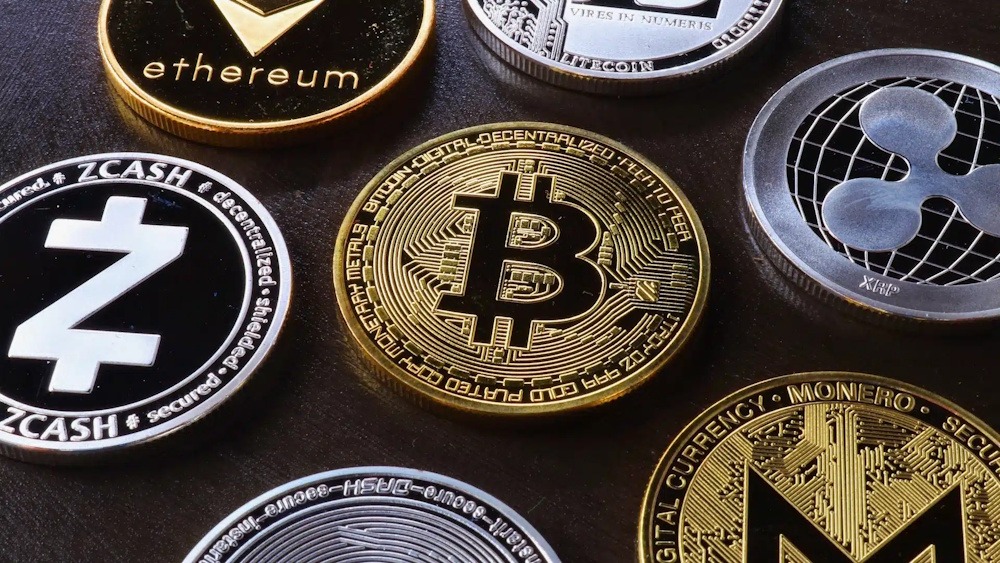
As we step into 2026, market analysts express a positive outlook on the path of cryptocurrencies, highlighting a shift from mere experimentation to a more profound financial integration and maturity. Analysts noted that innovation, regulation, and market infrastructure are converging in ways that will fundamentally reshape global market dynamics. With clearer regulations and increasing institutional involvement, there is a strong belief that the crypto landscape is set for significant transformation in the coming year. The year 2025 emerged as a pivotal moment for the cryptocurrency landscape. Bitcoin, the flagship token, has seen significant volatility, with sharp swings between record highs and steep corrections, putting investor confidence to the test. Ethereum also experienced comparable fluctuations. On the global stage, a significant development was the establishment of the US Crypto Strategic Reserve, a move spearheaded by President Donald Trump, in line with his vision of positioning the US as the ‘Crypto Capital of the World.’
The passage of the Guiding and Establishing National Innovation for US Stablecoins Act marks a significant milestone, highlighting the government’s backing for the broader acceptance of digital assets. The future of digital assets seems set for ongoing expansion. SB Seker highlighted that the industry is currently moving from a phase of experimentation to a stage of enhanced financial integration and maturity. He highlighted the increasing convergence of innovation, regulation, and market infrastructure, which is steadily transforming global market dynamics. As institutional ownership continues to climb, more than 200 public companies and ETFs are now collectively holding over 2.5 million BTC. This shift indicates that the valuation of digital assets is increasingly being anchored in fundamentals like transparency, utility, and compliance. “This shift is indicative of reduced volatility, signaling that cryptocurrencies are maturing into a more stable and essential component of the global financial infrastructure,” said Seker. Binance reports that institutional users have increased by 14 percent, while institutional trading volume has seen a year-over-year rise of 13 percent. Seker anticipates that this trend will persist, as institutional holdings diversify beyond Bitcoin and Ethereum into specific altcoins, driven by heightened involvement from governments and the public sector. Stablecoins have now exceeded $300 billion in market capitalization and are poised to take center stage in 2026. Analysts believe that the passage of regulatory frameworks such as the GENIUS Act is poised to accelerate the integration of digital assets into the broader financial system. Meanwhile, the momentum for Central Bank Digital Currencies is poised to weave digital assets into the fabric of mainstream finance, enhancing transparency and trust. The valuation of altcoins is expected to be influenced by these factors, with real-world utility and sustainable economics playing a crucial role. “As technological innovation continues to drive growth, the convergence of AI and blockchain technology will lead to more sophisticated, secure, and efficient financial infrastructures,” stated Seker.
India has solidified its position as a global frontrunner in crypto adoption, leading the Chainalysis Index for three straight years in 2025. Experts predict that India is set to further develop as a prominent crypto hub by 2026. The swift adoption of cryptocurrency across Tier I, II, and III cities showcases an increasing awareness, bolstered by a rising talent pool. Significantly, 20–30 percent of the globe’s Web3 developers originate from India, boasting over 1,200 Web3 startups within the nation. “Indian investors are sharpening their focus and becoming more selective in their crypto strategies. Instead of pursuing quick profits, portfolios are expected to concentrate on fundamentally robust assets like Bitcoin, Ethereum, Solana, and other large-cap tokens that hold long-term promise. Additionally, SIP-based investing is expected to gain traction, appealing to a new wave of investors who prefer steady, long-term exposure over the volatility of market timing,” said Edul Patel. Nonetheless, the ongoing regulatory uncertainty remains a significant barrier to growth. “Clear frameworks defining the roles of exchanges, brokers, and dealers are essential to retain talent domestically, protect consumers, and foster structured market growth,” stated Seker. Patel reiterated comparable worries, highlighting that regulatory clarity is a vital element for both investors and industry participants.
“The tax framework introduced in 2022 was a step in the right direction, but measures such as the 1 per cent TDS and the inability to offset losses have created friction, limiting healthy market participation.” India remains a leading nation in crypto adoption, accounting for more than 17 percent of the global Web3 workforce. The absence of a definitive regulatory framework has prompted numerous founders and developers to set up their operations overseas. “With clear and balanced regulations, much of this talent could be retained, allowing India to build global Web3 products domestically and solidify its position as a leader in the global crypto ecosystem,” Patel said. As India’s regulatory landscape evolves, it is anticipated to emerge as a significant differentiator. “India’s compliance framework promotes responsible adoption, emphasizing credibility and alignment with global standards.” “Education and disciplined participation will be crucial as blockchain technology’s broader potential gains recognition,” said Seker. Experts suggest that digital assets demonstrating robust fundamentals and practical applications are poised to excel in 2026. “Major assets such as Bitcoin, Ethereum, and Solana have undergone a significant leverage clean-up, resulting in current valuations that are increasingly appealing for long-term investors. This reset has created a stronger foundation for sustainable growth, rather than speculative price rallies,” said Patel. Analysts noted that emerging sectors like real-world asset tokenisation and AI-driven blockchain projects exhibit significant upside potential, driven by increasing adoption and growing institutional interest.